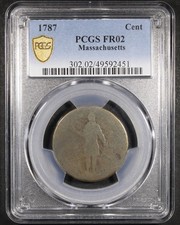
Considered fully authentic and Line
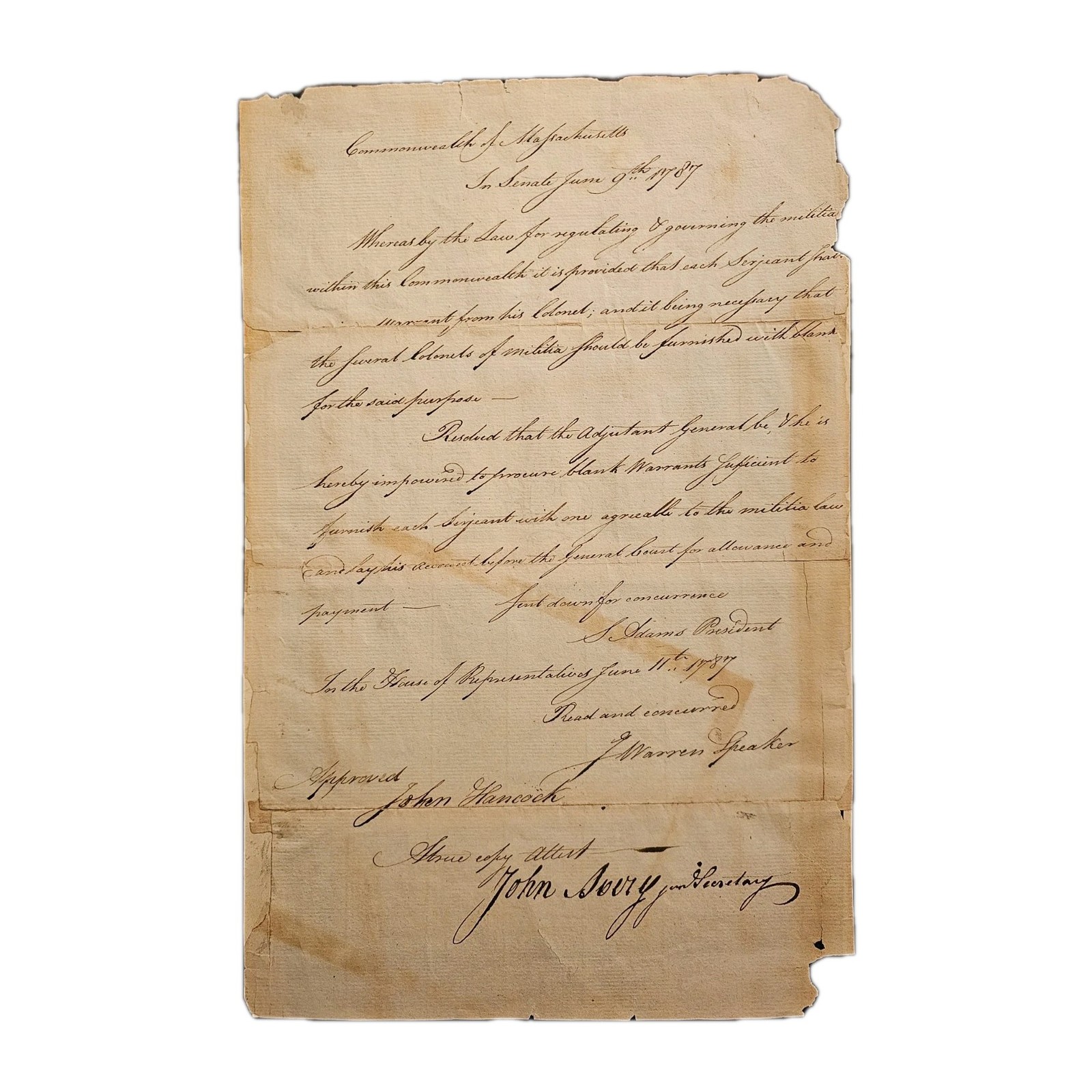
John Avery Jr. was one of the most important civil servants in Revolutionary Massachusetts
His signature is legally meaningful, not ornamental
On your document, his autograph is exactly what makes it an official, actionable record
John Hancock(1737–1793)
John Hancock was one of the most prominent political leaders of the American Revolution and an early architect of Massachusetts state government. Born in Braintree, Massachusetts, he inherited a substantial mercantile fortune from his uncle, which gave him both wealth and independence at a young age. This financial standing allowed Hancock to become an influential patron of the patriot cause during the 1760s and 1770s.
Hancock rose to national prominence as President of the Second Continental Congress (1775–1777), during which time he became the first signer of the Declaration of Independence, a role that permanently linked his name with American independence. After the Revolution, he returned to Massachusetts politics and served multiple terms as Governor of Massachusetts between 1780 and 1793.
As governor, Hancock presided over a fragile postwar society marked by economic instability and civil unrest, including the period immediately following Shays’ Rebellion. Documents bearing his gubernatorial approval reflect the practical realities of early American governance, when states were still defining their authority under newly written constitutions. Hancock’s signature on official acts is among the most recognizable and sought-after of the Revolutionary era.
Samuel Adams(1722–1803)
Samuel Adams was a leading Revolutionary thinker, organizer, and statesman whose influence on American independence extended well beyond formal officeholding. Born in Boston, Adams emerged as a powerful political writer and strategist, helping shape resistance to British authority through essays, committees, and grassroots organizing.
He played a central role in events such as the Boston Massacre, the Boston Tea Party, and the formation of the Committees of Correspondence, which helped unify colonial opposition to British policies. Unlike many of his contemporaries, Adams was less concerned with personal wealth and more focused on civic virtue, republicanism, and local self-governance.
After independence, Adams became a key figure in Massachusetts politics. He served multiple terms as President of the Massachusetts Senate, including in 1787, a critical year marked by militia reform and constitutional debate. He later became Lieutenant Governor and then Governor of Massachusetts (1794–1797).
Documents issued under Samuel Adams’ authority reflect the transition from revolutionary activism to the challenges of building and stabilizing republican institutions in the new United States.
James Warren(1726–1808)
James Warren was a prominent Revolutionary-era political leader, military organizer, and legislator in Massachusetts. Born in Plymouth, he became deeply involved in colonial resistance to British rule and emerged as a trusted ally of Samuel Adams and other patriot leaders during the 1760s and 1770s.
Warren served as President of the Massachusetts Provincial Congress during the American Revolution, helping oversee Massachusetts’ transition from royal colony to self-governing state. He was instrumental in organizing militia forces and coordinating civil authority during the war years, balancing military necessity with emerging republican ideals.
Following independence, Warren continued to play a major role in state politics and was elected Speaker of the Massachusetts House of Representatives, a position he held during the 1780s. In this role, he presided over legislative proceedings at a time when Massachusetts faced serious postwar challenges, including debt, civil unrest, and the restructuring of its militia system in the wake of Shays’ Rebellion.
Warren’s signature on legislative resolves reflects his authority as the chief officer of the House and his involvement in shaping early state governance. Though less famous than some of his contemporaries, he was a central figure in Massachusetts political life during the critical years when Revolutionary ideals were being translated into functioning government.