When you click on links to various merchants on this site and make a purchase, this can result in this site earning a commission. Affiliate programs and affiliations include, but are not limited to, the eBay Partner Network.
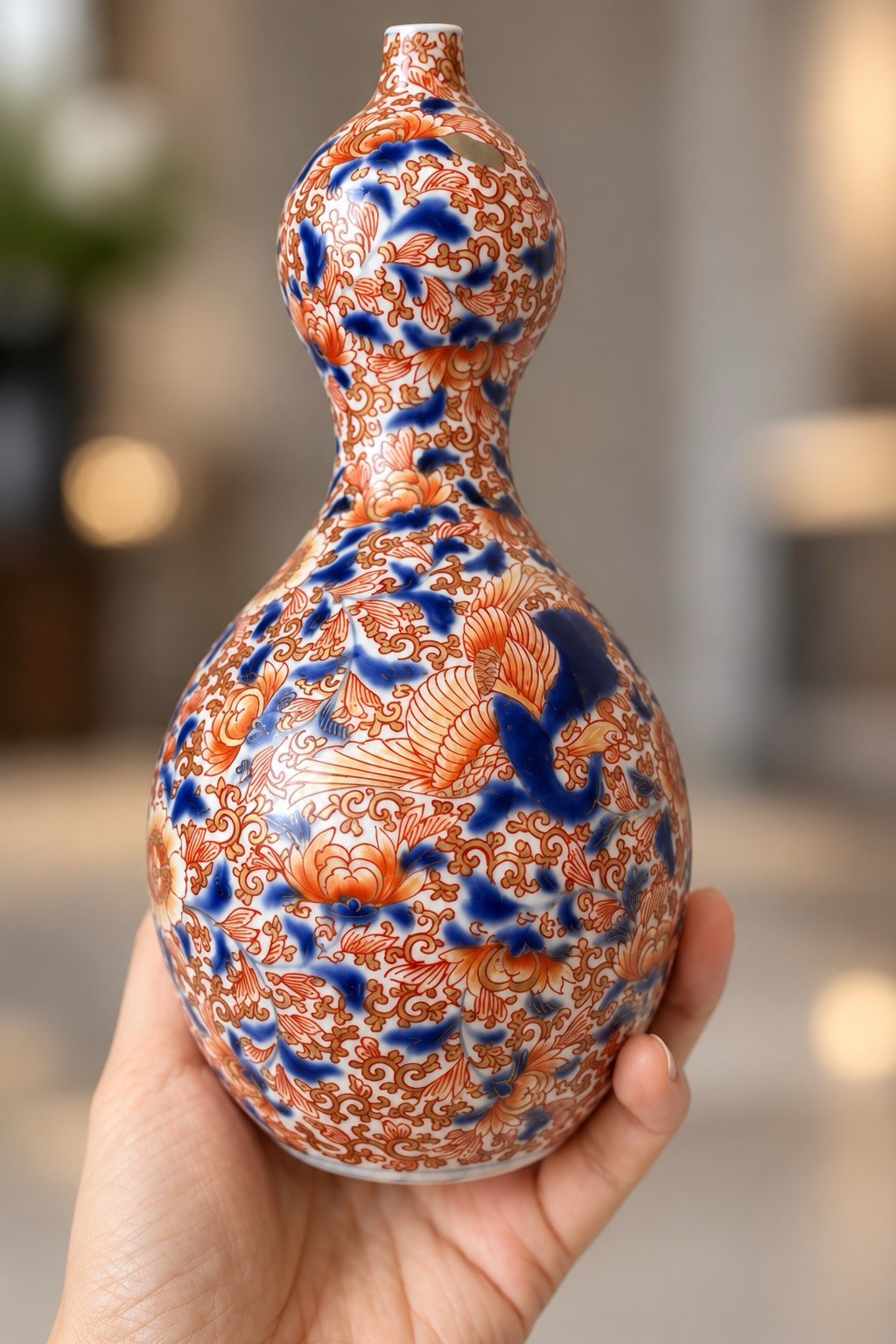
Antique Chinese Imari Double Gourd Vase – Qing Dynasty – Late Kangxi Style c.1700.
Antique Chinese Imari Double-Gourd Porcelain Vase
China, Qing Dynasty – Early 18th Century, probably Late Kangxi period, c. 1700–1722
An attractive antique Chinese porcelain double-gourd vase decorated in the classic Chinese Imari palette, combining underglaze cobalt blue with iron-red enamels and traces of gilt decoration.
The vase is densely painted with large stylised floral motifs, including lotus/chrysanthemum-type blossoms, scrolling foliage and fine iron-red linework. The decoration and colour combination are characteristic of Chinese export porcelain produced during the early 18th century.
The recessed glazed base bears an unusual small iron-red symbolic/vegetal mark. Comparable symbolic marks, including vegetal and auspicious devices, are documented on Kangxi-period porcelain, although the particular mark on this vase has not been conclusively identified.
The construction of the foot, slightly bluish-white glaze, hand-finished footrim, form and decorative vocabulary are consistent with early Qing porcelain and support a possible Late Kangxi attribution.
Comparable Chinese Imari porcelain dated to the Kangxi period can be found in major museum collections and international sale archives, including Christie’s and The Metropolitan Museum of Art.
Proposed attribution:
China, Qing Dynasty
Chinese Imari porcelain
Early 18th century
Probably Late Kangxi period, c. 1700–1722
Condition: Please examine all photographs carefully, as they form an important part of the condition description. Age-related wear, minor firing irregularities and losses/wear to the gilding and enamels should be expected on an object of this age. Please contact me if you require additional close-up photographs before purchase.
Important attribution note: Dating is based on stylistic and comparative analysis. The vase has not been accompanied by a thermoluminescence test or an independent written authentication certificate; therefore the Late Kangxi attribution is offered as an informed attribution rather than an absolute guarantee.