When you click on links to various merchants on this site and make a purchase, this can result in this site earning a commission. Affiliate programs and affiliations include, but are not limited to, the eBay Partner Network.
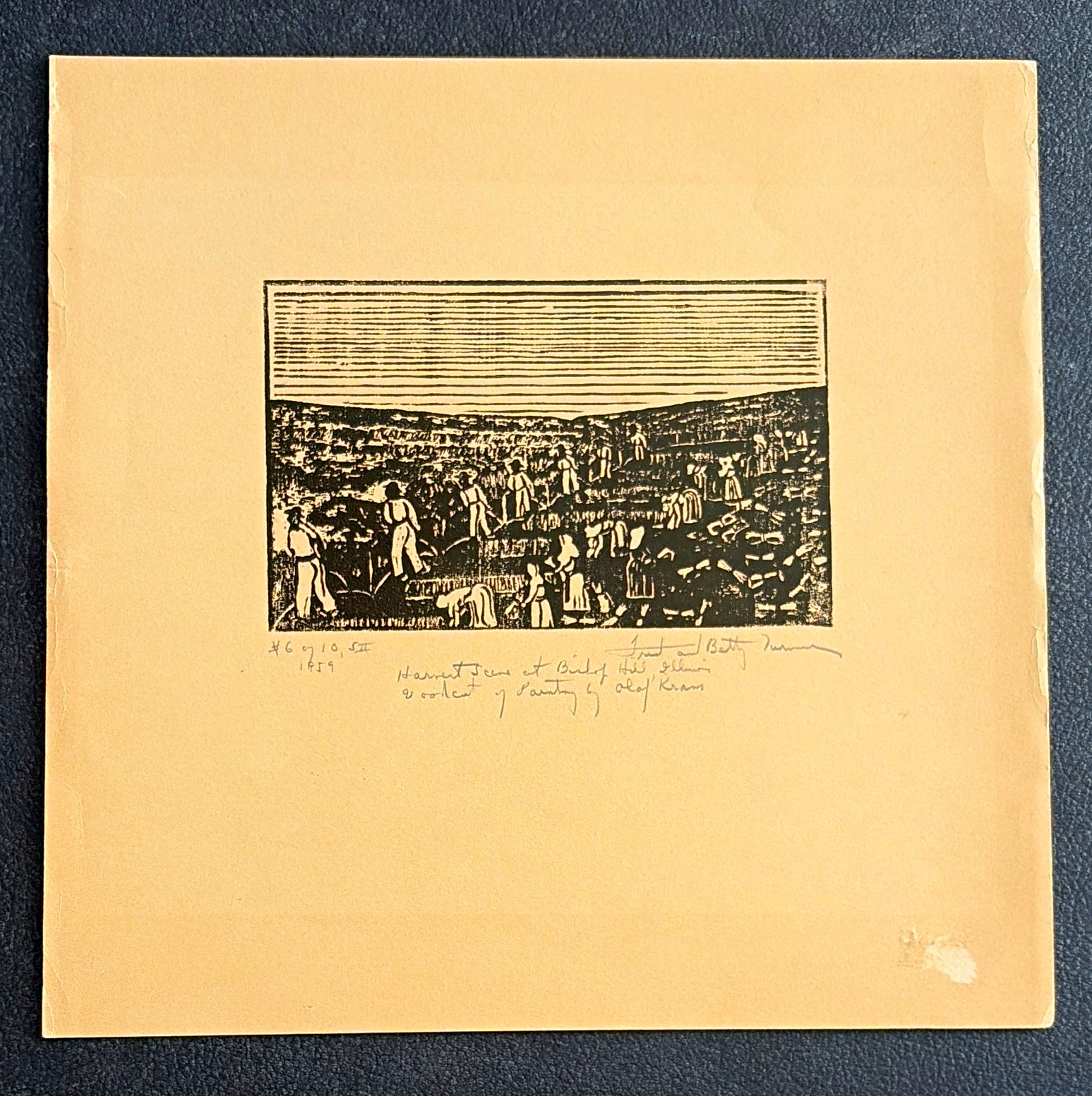
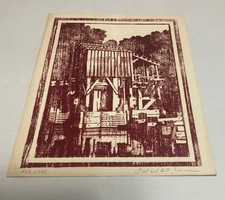
This is a 1959 woodcut print by Fred and Betty Turner of the harvest scene from Olof (Olaf) Krans’s painting of Bishop Hill, style=\"box-sizing: border-box; margin: 0px 0px 12px; padding: 0px; border: 0px solid rgb(228, 234, 236); --tw-space-y-reverse: 0; margin-block: 0px 16px;\">The handwritten inscription on the sheet matches the archival records of their work: “Harvest Scene at Bishop Hill Illinois / woodcut of painting by Olaf Krans,” signed “Fred and Betty Turner,” numbered “#6 of 10, S.P.” and dated 1959. The image area is about 7 × 4.25 inches on a roughly 12 × 12-inch sheet.
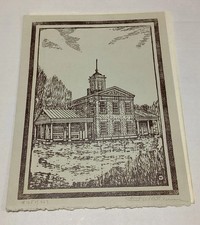
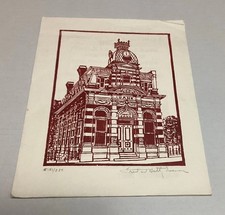
Fred H. Turner (1900–1975), longtime Dean of Students at the University of Illinois, and his wife Betty produced an annual series of original woodblock Christmas cards from 1946 to 1974. Each featured a different Illinois historic site or related subject, printed in limited numbers (often around 250–270) for friends. In 1959 their subject was Bishop Hill (the Swedish utopian colony founded in 1846). Archival inventories list both the Colony House and “Harvest Scene at Bishop Hill by Olaf Krans” for that style=\"box-sizing: border-box; margin: 0px 0px 12px; padding: 0px; border: 0px solid rgb(228, 234, 236); --tw-space-y-reverse: 0; margin-block: 0px 16px;\">The scene itself comes from Olof Krans (1838–1916), the Swedish-American folk/naïve painter who grew up in the Bishop Hill colony. His 1896 series of memory paintings (made for the colony’s 50th anniversary) includes Harvesting (also called Cradling the Grain or similar titles). It shows men swinging grain cradles and women binding sheaves in the communal fields—an iconic image of the colony’s cooperative labor. The Turners translated that composition into a stark black-and-white relief print.Illinoisart
S.P. is most likely a special/proof or small-edition designation (the main Christmas run was larger). These Turner woodblocks are collectible as Illinois historical/folk-art material; individual examples appear on the secondary market, though values vary with condition, numbering, and whether an original descriptive insert is present.
The print is a well-documented piece from the Turners’ long-running Illinois history series, directly tied to Krans’s important visual record of Bishop Hill.Fred and Betty Turner’s annual woodblock Christmas cards (1946–1974) of Illinois historic sites are recognized as collectible. Alumni and local-history sources describe them as rare when they appear and as finding “ready buyers on the antiques-collectibles market.” Editions were typically ~250–320; your example is unusually small (#6 of 10, S.P., 1959 Harvest Scene at Bishop Hill after Olof Krans), which helps.Uiaa
Public sale results and firm sold prices are scarce. Listings (e.g., a 1954 Conkey Town Bridge example on Worthpoint) exist, but realized prices are not widely published. Comparable interest is driven by Illinois history, Bishop Hill, or UI alumni collectors rather than the broader print market.
Rough market range for a signed, numbered example in good condition:
- Typical resale / dealer / online: roughly $150–$400
- Higher end ($400–600+) possible if it includes the original descriptive insert, is pristine, has strong Bishop Hill/Krans appeal, or reaches a motivated specialist buyer
- sale hammer prices often land toward the lower end of that range
Condition, presence of any original insert or documentation, and current buyer interest are the main variables.
This print is signed by both Fred and Betty Turner.