When you click on links to various merchants on this site and make a purchase, this can result in this site earning a commission. Affiliate programs and affiliations include, but are not limited to, the eBay Partner Network.
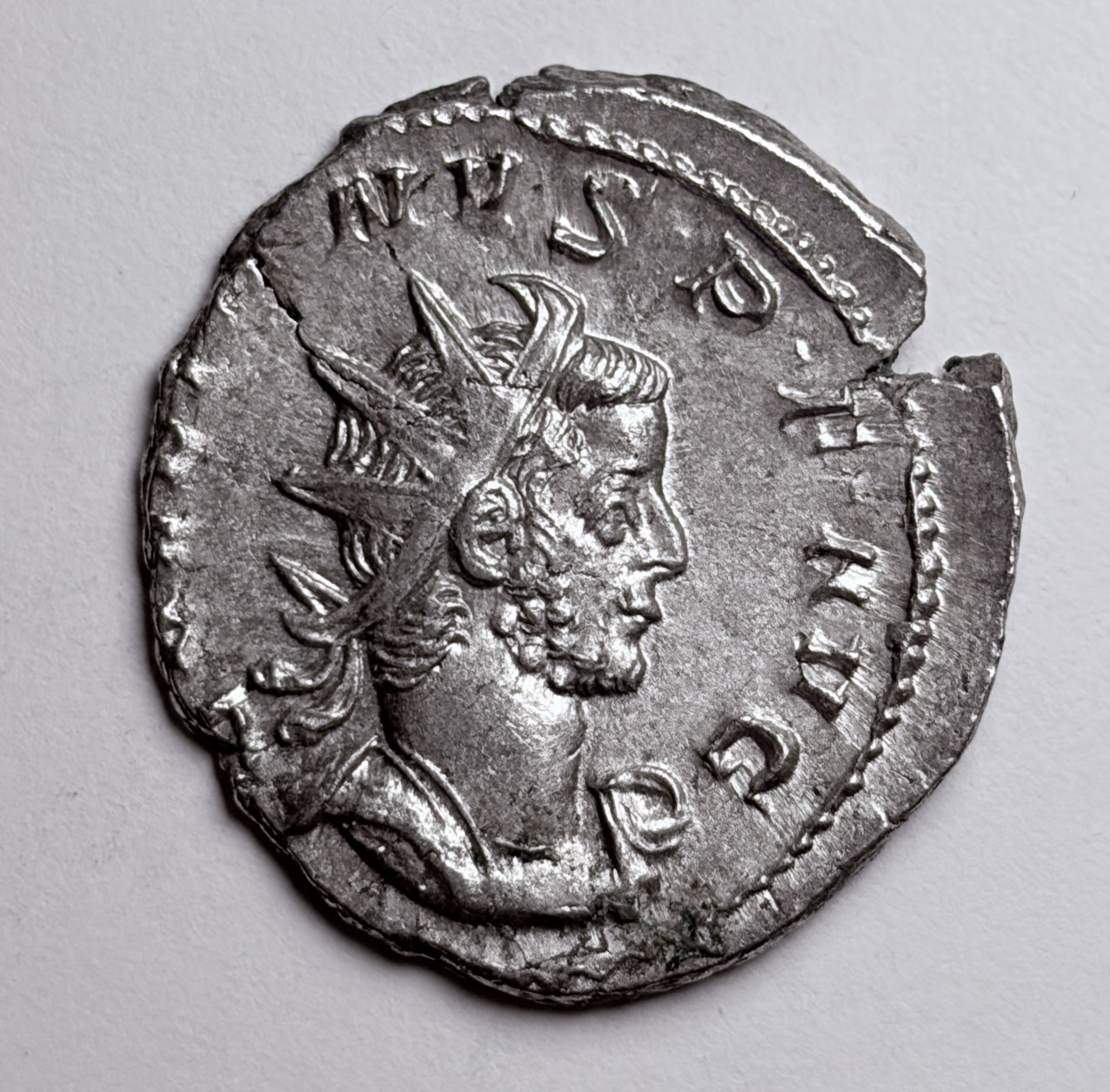
Roman Empire Coin of EmperorGallienus
Sole Reign (253-268 AD)Struck 257-260 ADat mint ofColonia Agrippinensis
Billon BI Antoninianus - Double Denarius -23 mm -3.3 grams
Reference:RIC-V 1 54 - MIR-890h -Tesorillo-Galieno 48, Plate Coin
Grade: VF
Obverse:GALLIENVS · P · F · AVG, Radiate and cuirassed bust of Gallienus facing right
Reverse:VIRT GALLIENI AVG, Emperor walking to right, holding transverse sceptre and round shield, treading down fallen enemy before himCollector\'s Notes:
From the Randy & Nancy Best Collection
Arrives with specifications page for your reference
See theGenuine HistoryCollection
Publius Licinius Egnatius Gallienus (circa 218 – September 268) was Roman emperor with his father Valerian from 253 to 260 and alone from 260 to 268. He ruled during the Crisis of the Third Century that nearly caused the collapse of the empire. He won numerous military victories against usurpers and Germanic tribes, but was unable to prevent the secession of important provinces. His 15-year reign was the longest in half a century.
Born into a wealthy and traditional senatorial family, Gallienus was the son of Valerian and Mariniana. Valerian became Emperor in September 253 and had the Roman Senate elevate Gallienus to the rank of Augustus. Valerian divided the empire between him and his son, with Valerian ruling the east and his son the west. Gallienus defeated the usurper Ingenuus in 258 and destroyed an Alemanni army at Mediolanum in 259.
The defeat and capture of Valerian at Edessa in 260 by the Sasanian Empire threw the Roman Empire into the chaos of civil war. Control of the whole empire passed to Gallienus. He defeated the eastern usurpers Macrianus Major and Lucius Mussius Aemilianus in 261–262 but failed to stop the formation of the breakaway Gallic Empire under general Postumus. Aureolus, another usurper, proclaimed himself emperor in Mediolanum in 268 but was defeated outside the city by Gallienus and besieged inside. While the siege was ongoing, Gallienus was assassinated, stabbed to death by the officer Cecropius, as part of a conspiracy.Cecropius, commander of the Dalmatians, spread the word that the forces of Aureolus were leaving the city, and Gallienus left his tent without his bodyguard, only to be struck down by Cecropius.] One version has Claudius selected as emperor by the conspirators, another chosen by Gallienus on his death bed; the Historia Augusta was concerned to substantiate the descent of the Constantinian dynasty from Claudius, and this may explain its accounts, which do not involve Claudius in the murder. The other sources (Zosimus i.40 and Zonaras xii.25) report that the conspiracy was organized by Heraclianus, Claudius, and Aurelian.
According to Aurelius Victor and Zonaras, on hearing the news that Gallienus was dead, the Senate in Rome ordered the execution of his family (including his brother Valerianus and son Marinianus) and their supporters, just before receiving a message from Claudius to spare their lives and deify his predecessor. The tomb of Gallienus is thought to be located to the south of Rome, at the IXth mile of the Via AppiaGallienus was not treated favorably by ancient historians. The biased and largely fictional account of that reign in the Historia Augusta describes him as a lover of luxury, who dressed in purple, sprinkled gold dust in his hair, and built castles of apples. Emperor Julian\'s The Caesars presents Gallienus \"with the dress and languishing gait of a woman\", which is possibly connected with coins portraying the emperor with unusual iconography and bearing the legend Gallienae Augustae. This animosity within the sources was partly due to the secession of Gaul and Palmyra and his inability to win them back; at the time of Gallienus\'s death, Palmyra was still nominally loyal to Rome, but, under the leadership of Odaenathus, was independent in nearly every other respect. Palmyra would formally secede after Odaenathus\'s death and the ascension of his widow Zenobia. It was not until the reign of Aurelian several years later that the breakaway provinces were truly brought back into the Roman fold. According to modern scholar Pat Southern, some historians now see Gallienus in a more positive light. Gallienus produced some useful reforms.
Bust in the Palatine Museum (formerly in the Museo Nazionale Romano), circa 262 AD