When you click on links to various merchants on this site and make a purchase, this can result in this site earning a commission. Affiliate programs and affiliations include, but are not limited to, the eBay Partner Network.
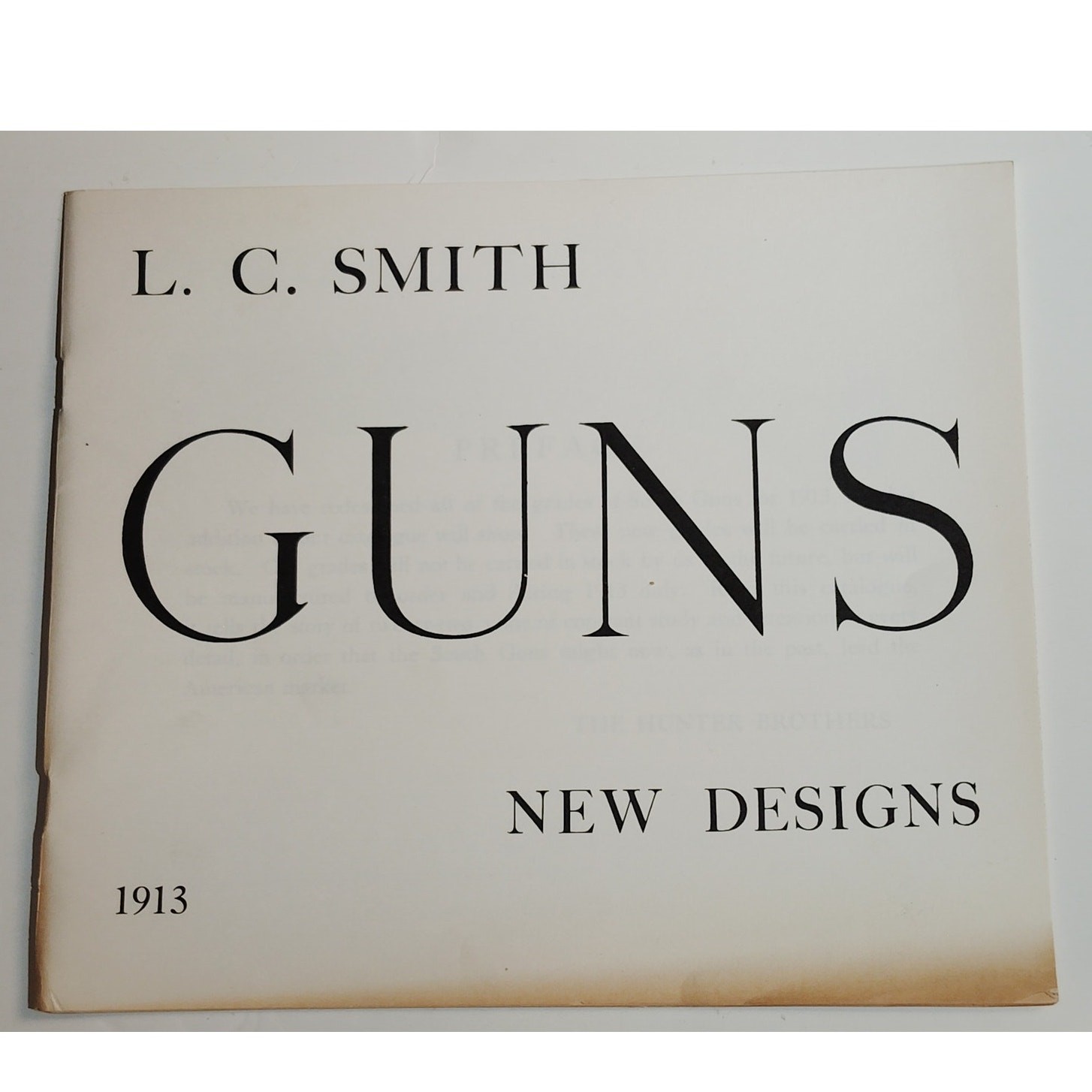
This original 16-page catalog from 1913 showcases the newly named grades of L.C. Smith side-by-side shotguns, including De Luxe, Premier, Monogram, Crown, Eagle, Specialty, Trap, Ideal, and Field models. Published by Hunter Arms Company, it also introduces the innovative Hunter One-Trigger system. The catalog opens with a preface from the Hunter Brothers and is illustrated throughout with detailed engravings and specificationsFeatures:
- Original catalog (Paper does show again, but overall in great condition with the high quality of card stock which was used in its production)
- Full descriptions of L.C. Smith grades post-1913 naming shift
- 16 pages total, including front and back covers
- Includes technical details and factory ordering guidance
- Historic firearm illustrations and innovations like the Hunter One-TriggerCondition:
- Vintage: May show age-related wear (original copy) Came out of a full unopened case, appear to have been stored in a clean dry area based upon the quality of the paper still.Product Details:
- Title: New Designs in Guns
- Publisher: Hunter Arms Company, Fulton, New York
- Year: 1913
- Format: Softcover Booklet
- Pages: 16
- Dimensions: Approx. 7-5/8\" x 9\"
- Subject: Shotgun Grades, U.S. Firearms HistoryThis catalog is a must-have for vintage firearms collectors, historians, and enthusiasts seeking a deeper understanding of L.C. Smith craftsmanship.
To the best of our knowledge, it is an original printing, actually coming from a military Surplus store\'s stockroom, in a dusty box that was unopened. The ones they had out were priced at $25 each. We also have a Winchester Catalog that is marked as being reprinted in 1970. This was an entire box of this item, unopened, that we came across. There is no indication that they are reproduced, and the white has discoloration that would be expected in such a case, but we have no evidence that it is a reprinted copy. I am not an expert on dating paper or anything, but the quality of this cardstock type of paper leads me to believe it is original, whereas reprints would typically not use the same quality of paper used in the early 1900s. To that note, though, there is also no date of publication printing either. And we have an entire. Based on how these were boxed in itself would be more of how they were packaged in the early 1900s versus mid-century or later reprints.