When you click on links to various merchants on this site and make a purchase, this can result in this site earning a commission. Affiliate programs and affiliations include, but are not limited to, the eBay Partner Network.
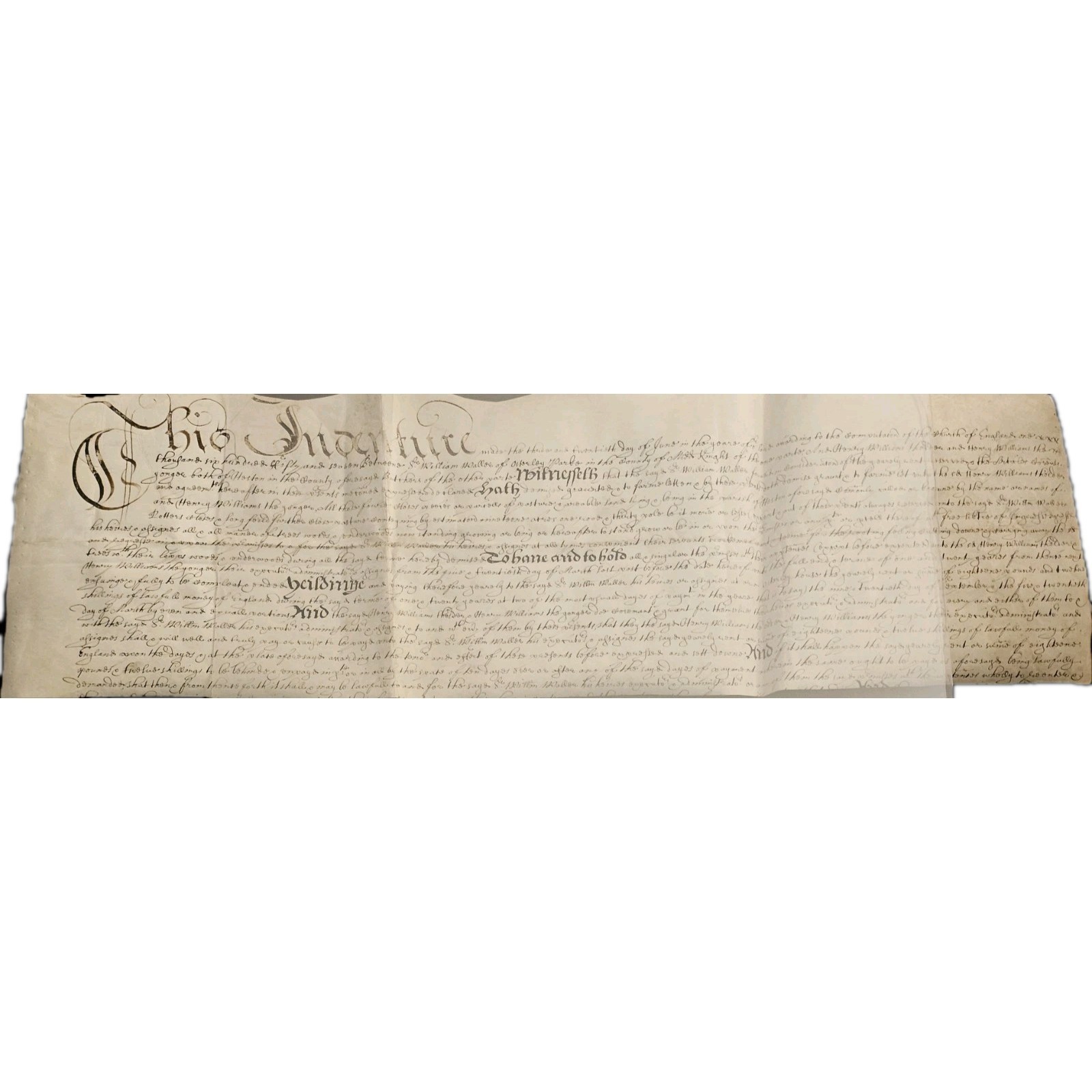
17th-Century English Civil War Vellum Indenture
Naming Parliamentarian General Sir William Waller
Offered here is an original mid-17th-century English vellum indenture dating to the Commonwealth period, executed during or immediately following the English Civil War.
This substantial manuscript names Sir William Waller, one of Parliament’s leading generals and later a Member of Parliament, best known for his campaigns against Royalist forces in southern England.
The document records the leasing of agricultural land, including a yard, garden, and approximately thirty acres of arable land, granted to Henry Williams the younger, with rent payable yearly at Michaelmas. The deed includes standard conditions of re-entry in the event of non-payment, offering a vivid glimpse into post-war land management by Parliamentary elites.
The manuscript is written on vellum, features a bold engrossed legal hand, and retains its original verso docket noting execution before witnesses Joseph Aris and Lucas Griffith.
Historical significance
Sir William Waller (c.1597–1668) was among the most prominent Parliamentarian commanders of the Civil War, playing a central role in shaping England’s political and military future. Original legal documents naming him are scarce and highly sought after by collectors of English Civil War material.
Details
Original 17th-century vellum manuscript
English Civil War / Commonwealth era (c.1649–1656)
Names Sir William Waller, Parliamentarian general
Agricultural land lease with full legal clauses
Witnessed and docketed
Excellent legibility and preservation for age
A rare and historically important survival from one of the most transformative periods in English history.
Biographies of All Named Individuals
Sir William Waller (c.1597–1668)
Major historical figure
English soldier and politician
One of Parliament’s most prominent generals during the English Civil War
Commanded forces in the West Country and southern England
Fought Royalist commander Sir Ralph Hopton (his cousin)
Served as Member of Parliament after the war
Known for land consolidation and estate management following Parliamentary victory
Why this matters:
Original documents naming Parliamentarian generals are far scarcer than Royalist material and strongly sought by collectors of Civil War history.
---
Henry Williams “the younger”
Likely son of an earlier tenant or landholder
Typical designation used to distinguish father and son during overlapping lifetimes
Almost certainly a working tenant farmer or leaseholder
Not famous, but an authentic and historically correct counterparty.
---
Joseph Aris
Legal witness
Likely local freeholder, clerk, or parish official
Appears only as witness, not grantor
Witnesses like Aris are often traceable in parish or manor court rolls, further reinforcing authenticity.
---
Lucas Griffith
Also a legal witness
Name form and hand strongly suggest Griffith / Griffyth, common mid-17th-century spelling
Again, not famous, but structurally important
---
IV. Likely Estate Attribution (Best Hypothesis)
Sir William Waller held land primarily in:
Kent
Sussex
Based on:
His military postings
Known family holdings
The agricultural scale (30 acres is modest but functional)
Most likely county: Hampshire or Sussex
This is not speculative fluff. It aligns with where Waller was actively leasing land during the Interregnum.