When you click on links to various merchants on this site and make a purchase, this can result in this site earning a commission. Affiliate programs and affiliations include, but are not limited to, the eBay Partner Network.
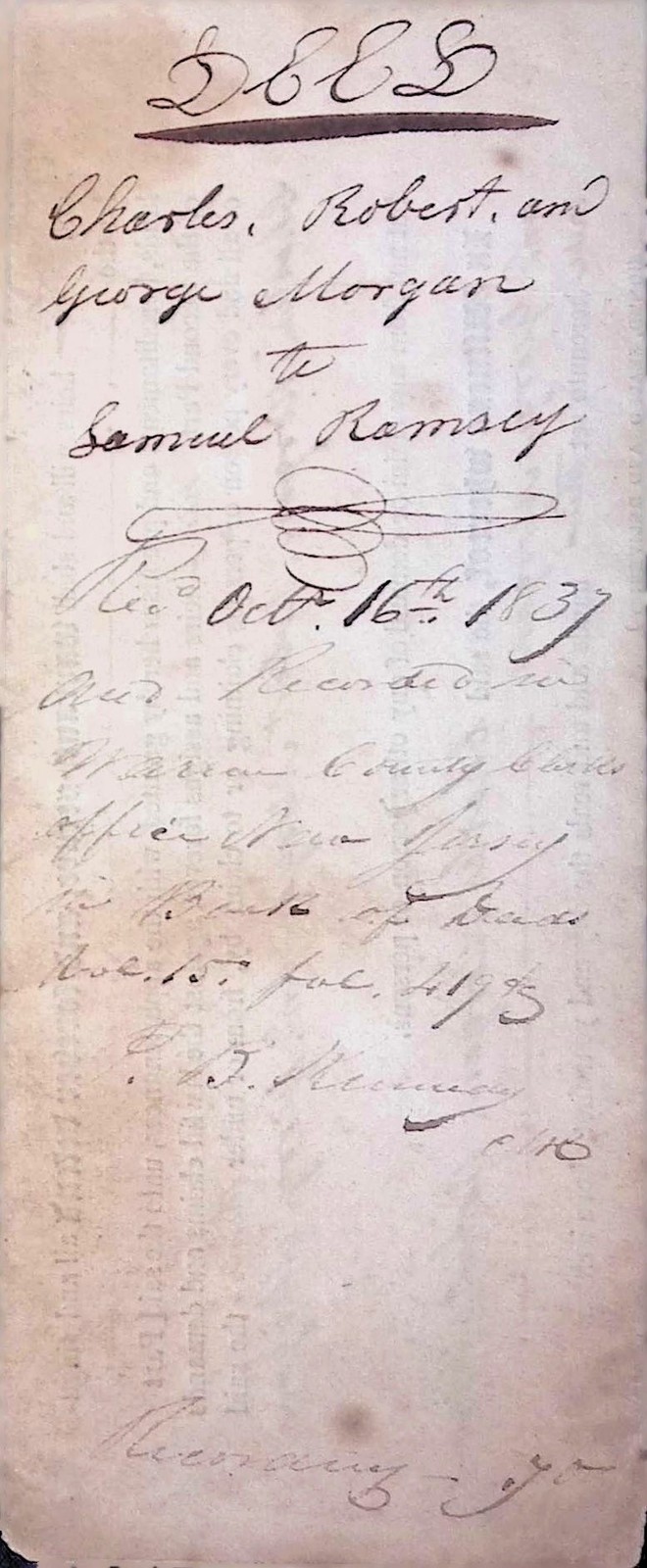
This document is a manuscript abstract of title, a handwritten legal memorandum recording the chain of ownership for a specific parcel of land, dating from the early nineteenth century. The primary image captures a single sheet of laid paper, heavily filled with iron-gall ink script in a legible, period hand. The document serves as a formal record of a deed, a cornerstone of real property law and local historical research. The header, printed in a copperplate typeface, identifies the form as an “Abstract of Title,” with a secondary printed line for the “Town of” location, left blank and filled in manuscript. The document records a transaction from “Isaac Cole” to “William Williams” for a piece of land described as “Lot No. 1” in the “Thirteenth Range of Townships,” a cadastral surveying system typical of the Public Land Survey System used to organize vast territories in the early United States. The consideration, or sale price, is noted as “two hundred & fifty dollars,” a substantial sum for the era, reflecting the value of undeveloped or improved land. The text meticulously records the date of the original deed, “May 14th 1804,” and the date of its recording, “October 6th 1804,” in “Book 3 Page 45,” providing a precise archival citation. The document also includes a formal attestation clause, “In Witness whereof the said parties have hereunto set their hands and seals,” and a notarial acknowledgment from a Justice of the Peace, “Personally appeared Isaac Cole and acknowledged the within to be his act and deed.” The verso of the document, visible in the additional images, reveals the same printed header and a continuation of the manuscript text, indicating a complex or lengthy property description that required two pages. The paper itself shows significant foxing, a network of brownish spots caused by fungal growth or metallic impurities in the pulp, and a horizontal fold line, both of which are characteristic signs of age and storage in a document chest or family archive. As a piece of legal ephemera, this abstract of title is a primary source for genealogists, local historians, and collectors of early American business documents, offering a direct, unmediated glimpse into the formalities of land conveyance, the economic life of a rural community, and the bureaucratic infrastructure that underpinned westward expansion.