When you click on links to various merchants on this site and make a purchase, this can result in this site earning a commission. Affiliate programs and affiliations include, but are not limited to, the eBay Partner Network.
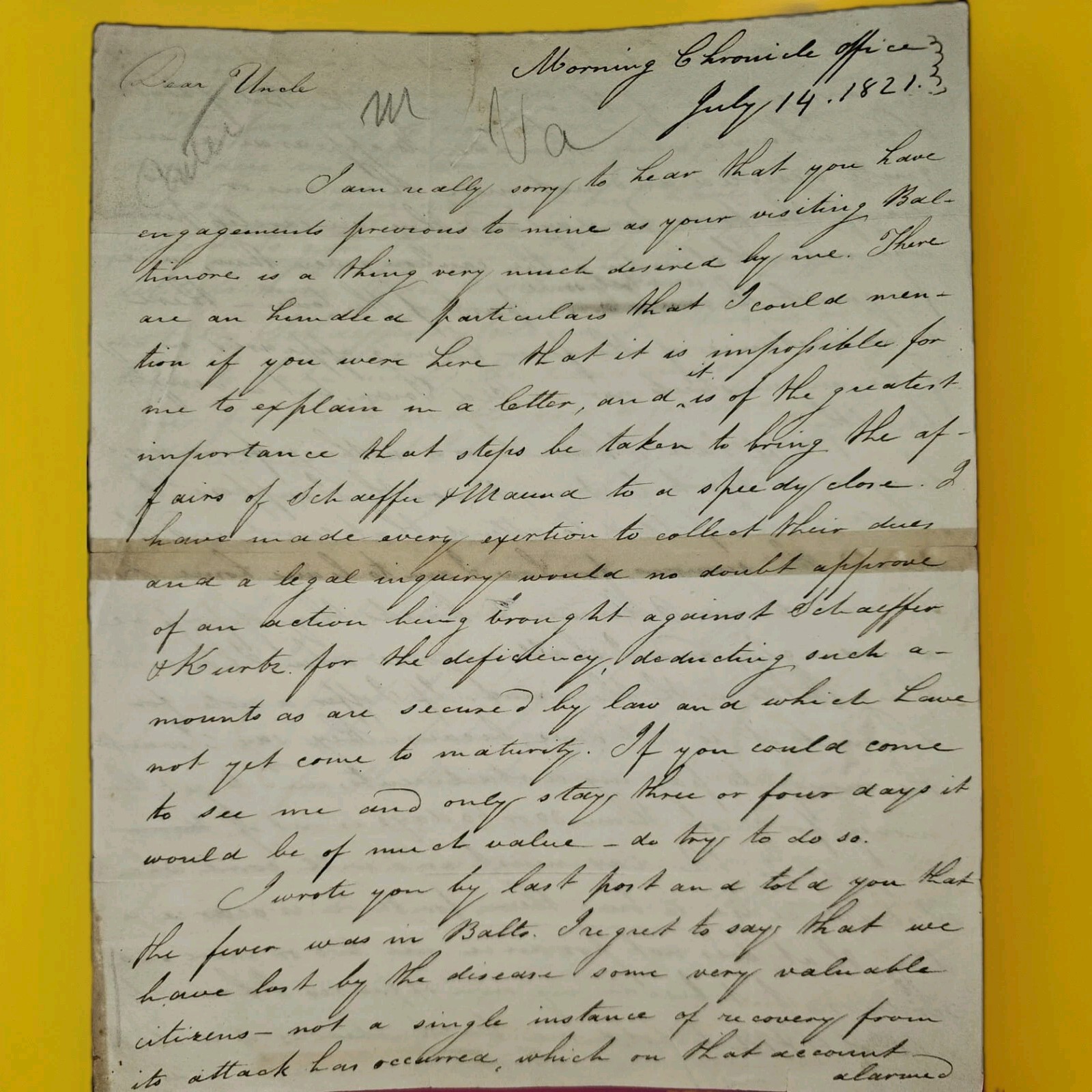
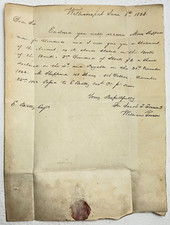
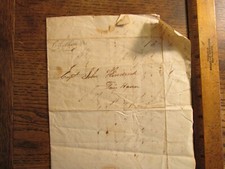
This exceptional 1823 letter offers a rare glimpse into early 19th-century plantation life, postal history, and the complex web of political and economic dealings in Virginia. Likely addressed to George Carter (1777–1846) of Oatlands Plantation, this letter highlights Carter’s role in establishing a post office at Oatlands with the support of President James Monroe. Carter, a staunch supporter of slavery, was also related to Thomas Maund through marriage, connecting two influential families during this period. It also touches upon the health hazards of living during this era as members as many people were dying from outbreaks of Yellow Fever.
Historical Significance:
This document goes beyond personal correspondence and shines a light on the socio-political and economic ecosystem of the time. In 1817, George Carter successfully petitioned President Monroe to establish a post office at Oatlands, creating a crucial commercial hub. Carter’s reliance on enslaved labor to maintain his wealth and operations, including mills and the post office, defined the region's economy.
The letter is also notable because Thomas Maund, who is believed to have authored it, was connected to George Carter through marriage. Maund was the publisher of the Morning Chronicle, a pro-slavery Baltimore newspaper that eventually collapsed in the mid-1820s. The Morning Chronicle, influenced or financially backed by pro-slavery interests like Carter’s, was part of a larger media landscape that supported plantation economies. This letter captures the critical period before the newspaper’s downfall and amid Carter's efforts to cement Oatlands' influence.
Biographies of Key Figures:
George Carter (1777–1846):
The son of Robert Carter III, George Carter inherited 3,400 acres from his father but diverged significantly from his father’s progressive views. While Robert Carter III freed hundreds of enslaved people in his lifetime, George used enslaved labor to build and maintain Oatlands, expanding it into a successful wheat plantation with mills, businesses, and a post office. His influence stretched beyond agriculture, shaping local commerce through the establishment of Oatlands' post office in 1817.
Robert Carter III (1728–1804):
Known for his unprecedented emancipation of enslaved individuals via the "Deed of Gift" in 1791, Robert Carter III was a progressive voice in colonial Virginia. His son George, however, upheld the institution of slavery and used it to fuel the success of Oatlands.
Thomas Maund (Publisher of The Morning Chronicle):
Related to George Carter through marriage, Thomas Maund ran The Morning Chronicle, a newspaper that was likely supported by pro-slavery interests, including Carter’s. The Chronicle collapsed in the mid-1820s, partly due to the unstable economy that relied heavily on slavery. This letter may mark the financial strain both men were under during this period, reflecting the vulnerabilities of plantation-linked economies.
President James Monroe (1758–1831):
A neighbor of George Carter, Monroe approved the establishment of a post office at Oatlands in 1817. Monroe’s presidency was marked by the expansion of U.S. territories, balancing the institution of slavery with national growth.
Transcription of the Letter:
"Morning Chronicle Office
July 14, 1823
Dear Uncle,
I am really sorry to hear that you have engagements previous to mine as your visiting Baltimore is a thing very much desired by us. There are hundreds of situations that I could mention if you were here, but it is impossible for me to explain in a letter, and one is of the greatest importance: what steps be taken to bring the affairs of Schaeffer & Manuel to a speedy close. I have made every exertion to collect their dues and a legal inquiry would no doubt approve of an action being brought against Schaeffer & Kurtz for the deficiency, deducting such amounts as are secured by law and which have not yet come to maturity. If you could come to see me and only stay three or four days it would be of much value – do try to do so.
I wrote you by last post and told you that the fever was in Baltimore. I regret to say that we have lost by the disease some very valuable citizens – not a single instance of recovery from its attack has occurred, which on that account alarms...
...no the more but I think that it has left our city in consequence of the vigilance of the Bot. of health. Those wharves where it made its appearance are quite deserted and not more than one or two die of the fever per day, and they are careless persons who, notwithstanding the caution given them, will frequent the most unwholesome parts of the town. There is no instance of the fever having appeared in any of the main streets nor in Old Town, but is very healthy.
Of late I have heard nothing from my lawyer at York, but next month I suppose I shall be compelled to attend that court and dread the summons for two reasons which you do not know. Oh the cursed banks, they oppress me amazingly, and I shall rejoice when I have nothing to do with their money. If I offer a note to discount it is not done because they say I want the money to pay my curtailments, and to get money for more than 30 or 60 days is out of the question. The day must and will come when I shall cease to owe them, for there is scarcely a day that does not produce me two or more solicitors – besides my own expenses I have the debts of G. & M. to hold me back...
$4.75
I will let you know the nature of my account with my aunt next week. It is an old debt with G. & M., and I hope that it will require much time to get it into the shape of an account. But do try and come to Baltimore on the receipt of this letter."
Historical Importance:This letter offers an exceptional snapshot of plantation and postal history, along with the interconnected business and media interests that shaped the antebellum South. It also highlights the complex relationships between family, business, and politics, as exemplified by the Carter and Maund families.
A rare opportunity to own a document rich with historical context and connections to key figures in early 19th-century Virginia.