When you click on links to various merchants on this site and make a purchase, this can result in this site earning a commission. Affiliate programs and affiliations include, but are not limited to, the eBay Partner Network.
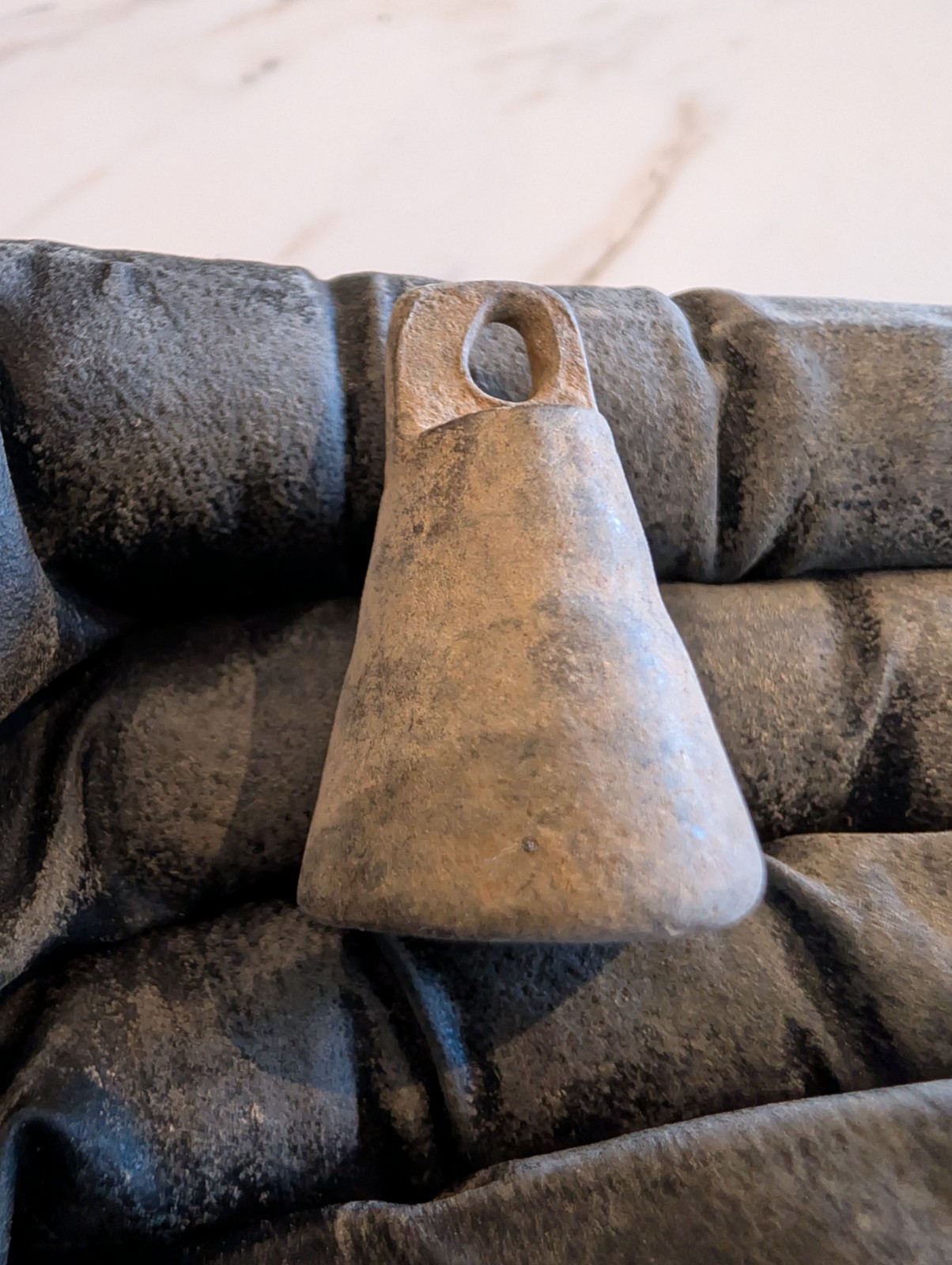
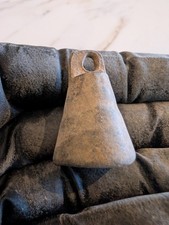
Ancient Levantine / Near Eastern Bronze Bell - Circa 1000 to 300 BC
Authenticity Notice
This artifact is certified authentic and will be accompanied by a Certificate of Authenticity and Provenance. All professional inventory is vetted through recognized platforms to ensure legal standing.
Details
Object: Cast Bronze Bell / Caravan Bell / Harness Amulet
Culture: Canaanite / Iron Age Judaea / Near Eastern
Date: Circa 1000 to 300 BC (Iron Age to Persian Period)
Material: Heavy Cast Bronze / Copper Alloy — preserving a rich, rough olive-green and desert-brown earthen burial patina
Form: Tapered conical hollow-cast body with a thick, integral rectangular top suspension loop
Dimensions: Approx. 40 mm height x 30 mm base diameter (based on hand scale)
Region: Ancient Levant / Near East / Judaean Hills
Iconographic and Typological Analysis
Early Conical Casting: Primitive lost-wax casting featuring a heavy, thick-walled conical sound chamber and an open interior designed for an iron or bronze clapper.
Integrated Suspension Lug: Features a oversized top suspension loop engineered to withstand heavy movement while suspended from leather tack or animal harnesses.
Trade & Apotropaic Function: Small bronze bells served dual purposes in antiquity: practical signaling for merchant caravans traversing trade routes, and spiritual protection (ringing to ward off malevolent spirits and evil forces).
Overview and Historical Context
During the Iron Age and Persian Period across the Ancient Near East, bronze bells were vital accessories for trade and daily life. Attached to the harnesses of horses, camels, and pack mules, their sound signaled the arrival of merchant caravans along ancient trade highways. Beyond utility, bells held strong apotropaic significance in Levantine folklore—the sound of bronze was believed to repel evil spirits and protect livestock from harm. Cast with heavy walls and a sturdy top eyelet, this complete hollow bell is a tangible survivor of ancient Near Eastern trade and belief systems.
Authenticity Check
Authentic hollow-cast interior showing early hand-casting asymmetry and internal soil deposits.
Original, undisturbed terrestrial burial patina present both inside the sound chamber and across the exterior.
Museum Comparable Examples
The Israel Museum, Jerusalem: Iron Age and Persian Period bronze bells and harness trappings from Levantine sites.
The British Museum, London: Accession No. 132062 — Ancient Near Eastern bronze bells and equine fittings.
The Metropolitan Museum of Art, New York: Iron Age Near Eastern copper alloy bells.
Academic References
Moorey, P. R. S. 1971. Catalogue of the Ancient Persian Bronzes in the Ashmolean Museum. Clarendon Press.
Mazar, A. 1990. Archaeology of the Land of the Bible. Doubleday.
Very fine archaeological condition. Complete hollow form preserving its solid suspension loop, thick walls, and deep authentic burial patina (clapper degraded in burial, as standard for ancient bells).
A1
A1