When you click on links to various merchants on this site and make a purchase, this can result in this site earning a commission. Affiliate programs and affiliations include, but are not limited to, the eBay Partner Network.
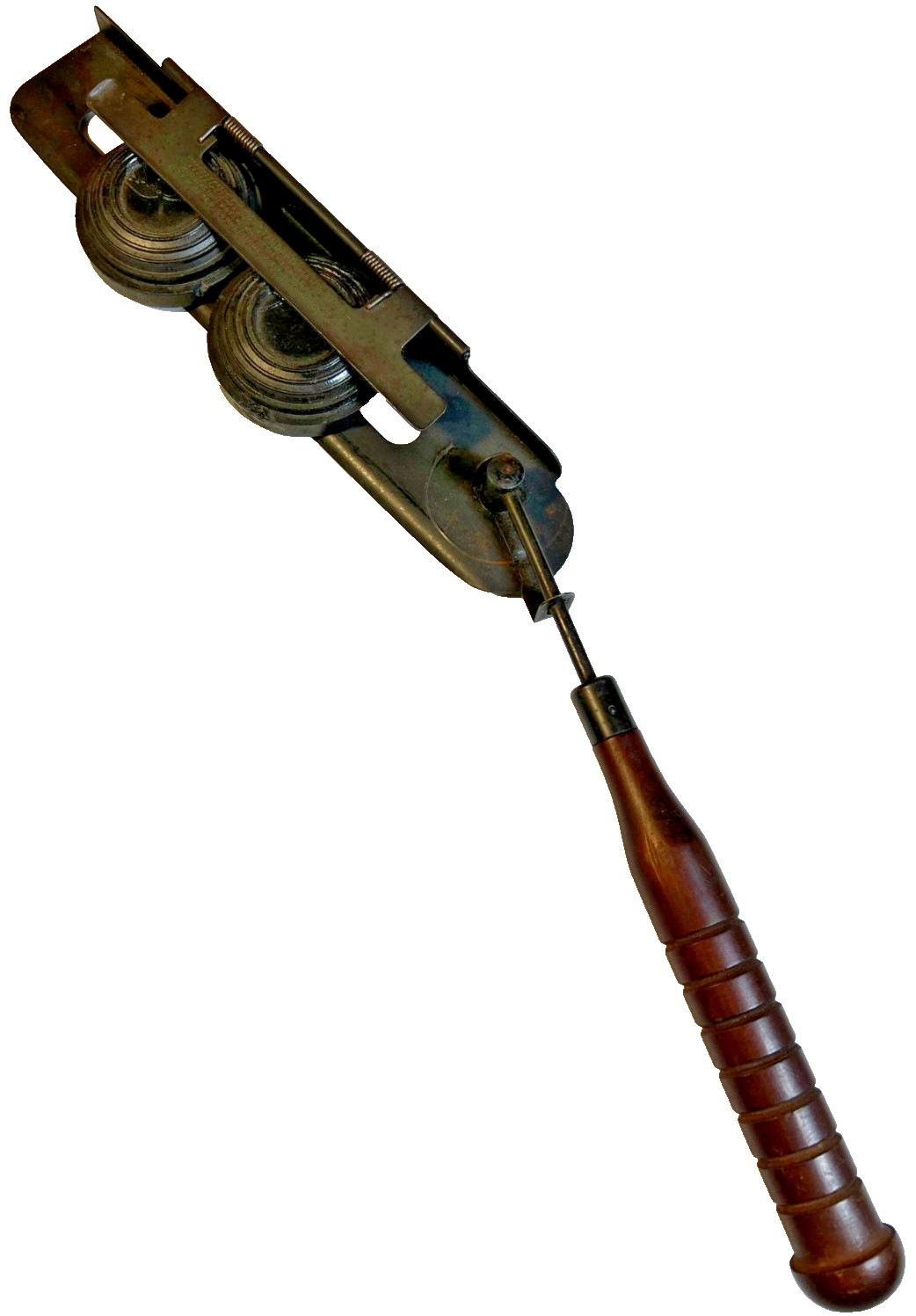
You’ve got a Winchester Standard Hand Trap, made by Winchester Repeating Arms Co. of New Haven, Connecticut, and your example is marked with the patent date June 10, 1919 right on the frame. The exact day we can tie to the piece is that patent date; the trap itself was most likely manufactured in the early 1920s, not decades later, because Winchester was actively marketing hand-trap shooting gear in that period and rolled out its Junior Trap Shooting Outfit in 1920.
The thrower itself looks excellent and very original: strong finish remaining on the metal, crisp maker’s stamp, nice turned wood handle, and no obvious abuse or later modifications. The big plus is that you still have two original clay targets. The catch is that one target having chips and cracks.
What it is and how it was used
A hand trap is a manual clay-target thrower. You loaded a clay “pigeon” into the carrier, cocked the mechanism against spring tension, then swung or triggered it so the target launched into the air for shotgun practice. Winchester sold these so shooters could practice trapshooting without needing a full ground trap setup. The smaller “Midget” version was used in the Junior outfit, while your Standard model was for regular-size targets and standard shotgun practice. Winchester advertising emphasized that one person could even throw and shoot in some setups, though two people made more sense unless you had octopus credentials.
Maker
The maker was Winchester Repeating Arms Company, headquartered in New Haven, Connecticut. Winchester’s New Haven works were one of the city’s signature industrial operations, with roots going back to the 1850s and major factory expansion tied to the company’s rise as one of America’s best-known firearms and ammunition makers. The Winchester district is still recognized today as a major historic industrial site in New Haven.
Precise date
The most precise date supported by the piece and surviving references is:
Patent date: June 10, 1919
That is the date stamped on your trap and matches period references to the Winchester hand-trap patent. The inventor tied to that patent is identified in collector references as Gustave Johnson of New Haven, assigned to Winchester. I would describe the trap in a listing as “patented June 10, 1919; likely manufactured early 1920s.” That is precise without pretending we have a factory ship date in hand.
Life during the period
This trap comes from the edge of the post–World War I / early Roaring Twenties world. In politics, the big headline shift was women’s suffrage: the 19th Amendment was passed by Congress in 1919 and ratified in 1920. In medicine, one of the decade’s greatest breakthroughs was insulin, discovered in 1921 and soon transforming diabetes treatment. In technology and everyday life, radio exploded as a national medium, and Congress passed the Radio Act of 1927 to regulate the fast-growing airwaves.
What was happening in New Haven in that decade
New Haven in the 1910s–1920s was still very much an industrial city, and Winchester was one of its defining employers. The surrounding working-class neighborhoods grew alongside the factory system. Locally, New Haven also claims some fun cultural firsts: the New Haven Museum notes Frisbee in 1920 among the city’s better-known innovations, and the city’s theaters, especially the Shubert, were major cultural engines for pre-Broadway productions. Connecticut statewide, the University of New Haven was founded in 1920, which helps anchor the period nicely.
Relevant gun news and famous names from that era
This hand trap sits right in a lively Winchester sporting period. In 1920, Winchester introduced the Model 20 .410 as part of the Junior Trap Shooting Outfit. In 1921, Winchester introduced the famous Super-X shotshell brand, and in 1923 it brought out the first Winchester 3-inch Magnum shotgun loads. That means your trap comes from the exact moment clay-target shooting and shotgun marketing were becoming a bigger organized consumer sport.
As for famous trapshooters around that broader era, Mark Arie was one of the biggest names in American trapshooting and won Olympic gold in trap in 1920. Frank Troeh was another towering early trapshooting figure whose staggering career totals made him one of the sport’s legends. Even John Philip Sousa was connected to organized American trapshooting as the first president of a forerunner to today’s Amateur Trapshooting Association.