When you click on links to various merchants on this site and make a purchase, this can result in this site earning a commission. Affiliate programs and affiliations include, but are not limited to, the eBay Partner Network.
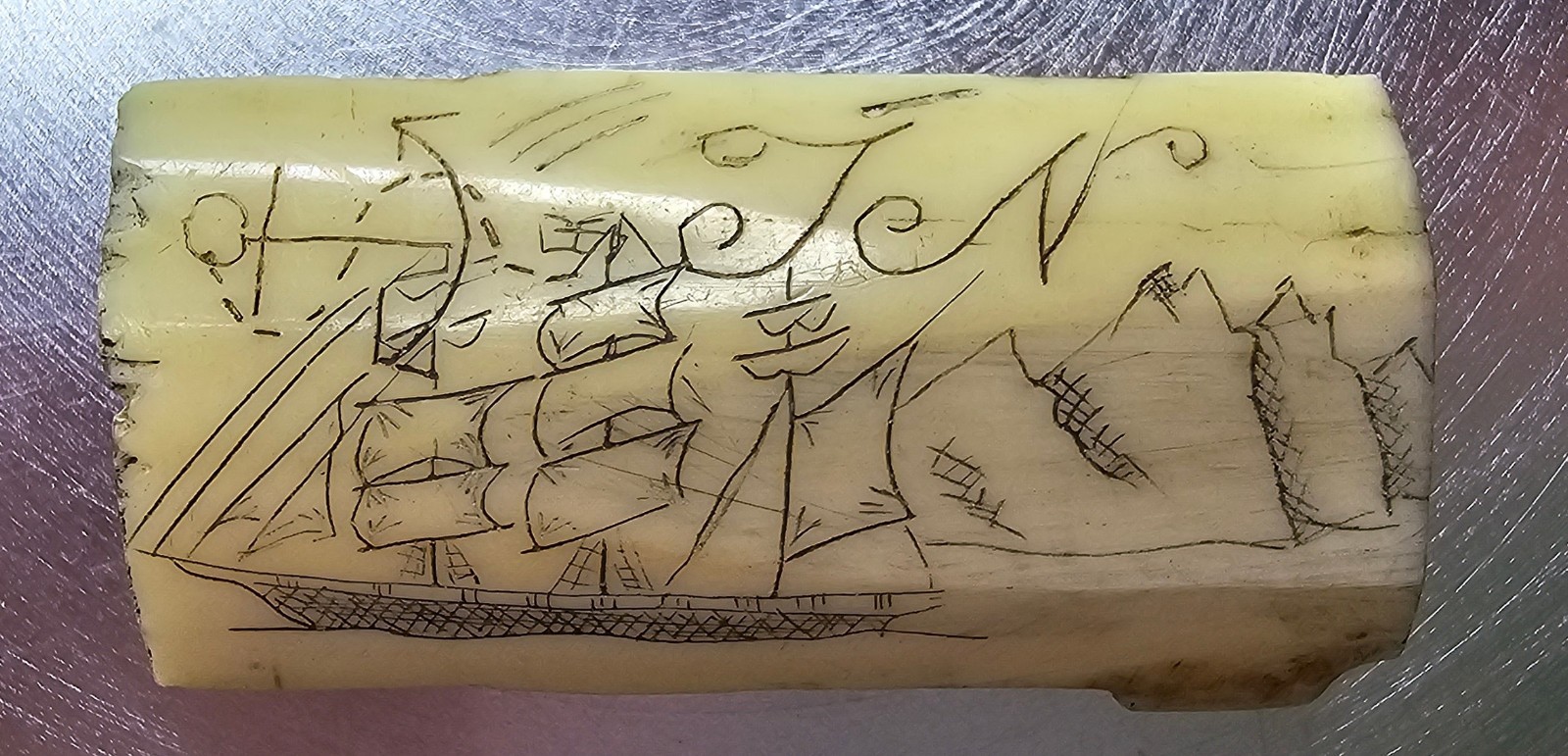
An authentic, miniature early 19th-century folk-art plaque, hand-incised by a captive soldier/sailor during the Napoleonic Wars.
The curved front face features detailed pin-prick and line-engraved maritime imagery:
- A fully rigged three-masted sailing ship under sail
- A fouled anchor to the upper left
- A rugged mountainous/cliff coastline to the right
- Flowing script / initials (\"JcN\" or similar cipher) overhead
- Infilled with dark pigment to accent the detailed hand-cut linework
The reverse clearly shows the natural concave curve of the original marrow channel, characteristic of food ration bones repurposed by prisoners.
Date: Circa 1810 (Napoleonic Wars period)- Dimensions: Approx. 50 mm x 30 mm (5 cm x 3 cm)
- Material: Antique Domestic Ration / Soup Bone (Bos taurus)
- Condition: Good original antique condition with authentic age toning, fine surface lines, and minor natural edge wear consistent with over 200 years of age. The engraving remains clear and legible. Please view all photos.
Historical Note: Napoleonic Prisoner of War Craft
Between 1793 and 1815, thousands of French and allied naval seamen and soldiers were interned in British prison depots (such as Norman Cross and Dartmoor) and hulks moored in southern ports.
With long years of confinement and limited resources, prisoners salvaged beef shank and soup bones from their daily food rations. After scraping, boiling, and shaping the bone fragments, skilled carvers used improvised needles, blades, and lampblack/soot to etch detailed maritime scenes, memories of home, or patriotic motifs. These pieces were traded among prisoners or sold to British civilians at permitted depot markets to buy extra food and tobacco. This piece is a classic, evocative example of early 19th-century prisoner folk art.