When you click on links to various merchants on this site and make a purchase, this can result in this site earning a commission. Affiliate programs and affiliations include, but are not limited to, the eBay Partner Network.
Dimensions:
Height: 36cm - Width: 34cm
(14.17" x 13.38")
Gilded bronze on carved oak stand.
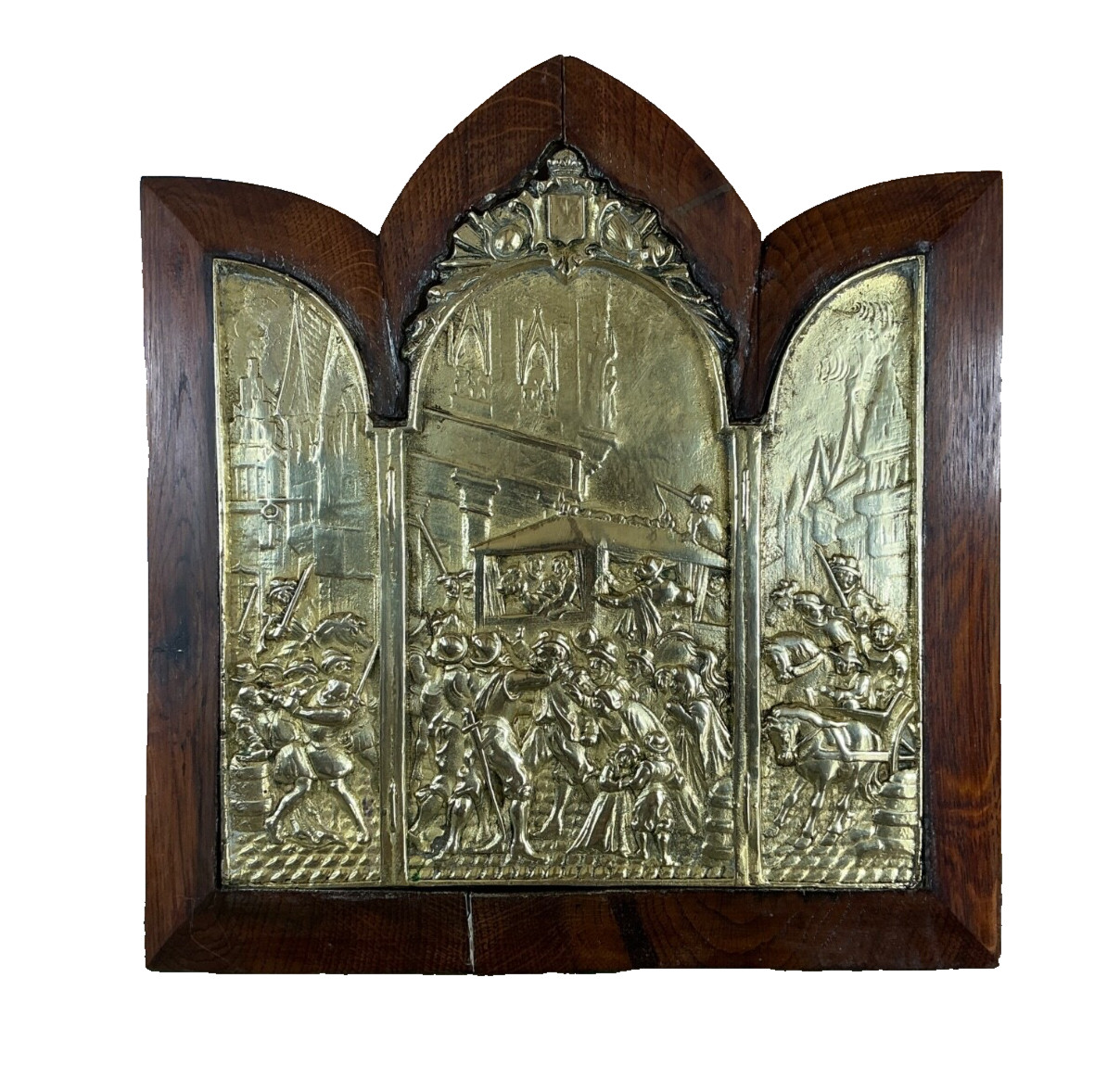
The antique lair brings you this remarkable chiseled bronze triptych restores with striking force l’assassinat d’Henri IV, King of France, arrived in Paris on May 14, 1610. A true collector's item, this three-part bas-relief depicts the dramatic moment when the king is beaten to death in his carriage on a narrow street in the capital.
The center stage shows the carriage stopped in the rue de la Ferronnerie, bottled that day in the presence of a hay cart. The king, en route to the Arsenal, finds himself immobilized. François Ravaillac, a fanatical Catholic convinced that the king is about to wage war against the Spanish Catholics, takes the opportunity to sneak into the crowd. He gets on the wheel of the carriage and hits Henry IV of three stabbings, including two mortals.
The triptych highlights this key scene: popular turmoil, disoriented guards, and the king's face at the time of the fatal blow. The work pays tribute to the tragic and political dimension of this founding event of French modern history.
About Ravaillac:
Born in 1578 in Angoulême, François Ravaillac is a former monk, animated by an exalted mysticism." Repeatedly refused into orders, he sinks into a religious obsession. Convinced to act by divine mission, he sees Henry IV as a heretical king, despite his abjuration and the signing of the "Edict of Nantes". After his crime, Ravaillac was immediately arrested and then judged and executed in atrocious suffering" for regicide, May 27, 1610, Place de Grève.
Condition:
Very good condition. Bronze retains its beautiful golden patina, solid wood frame is intact. Details are crisp, revealing the high quality of the casting and carving work.
A work of high symbolic value:
This triptych is not just a historical scene. It evokes the religious tensions of the late 16th century, the fragilities of the monarchy, and the tragic emergence of fanaticism in the course of history."" It embodies the memory of a beloved king of the people, murdered in the midst of a rebirth
Bronze triptych Henry IV, François Ravaillac, regicide, history of France, rue de la Ferronnerie, historical art 19th century, gilded bronze sculpture, royal art, assassination of king, religious fanaticism, historical bas-relief, political furniture, Gothic art object, monarchical souvenir, cabinet of curiosities, royal collection.