When you click on links to various merchants on this site and make a purchase, this can result in this site earning a commission. Affiliate programs and affiliations include, but are not limited to, the eBay Partner Network.
Hoboken New Jersey History Hudson County 1940s-1960s Memoir Photos Jersey City
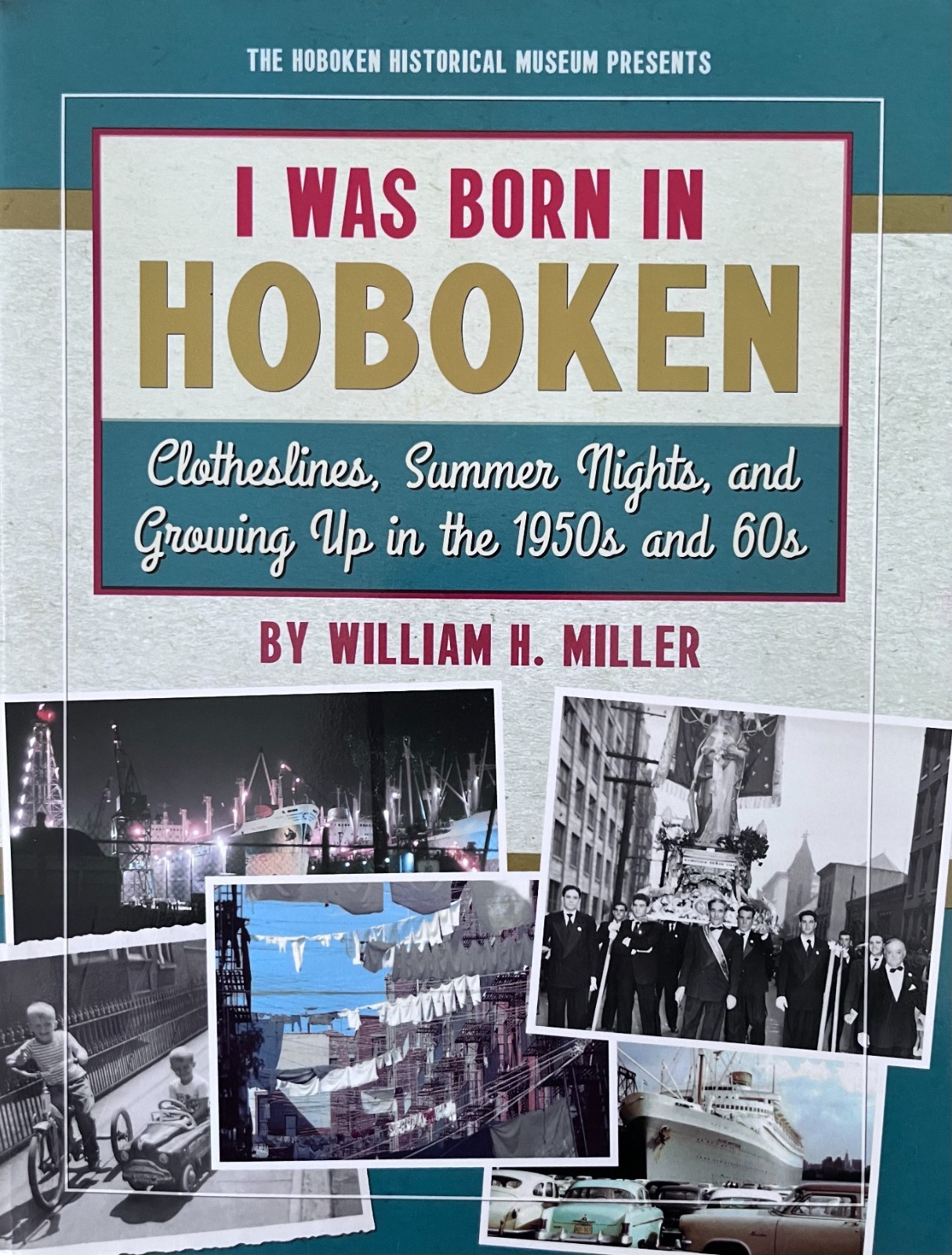
A nostalgic, vividly detailed memoir of mid-20th-century life in Hoboken, New Jersey, told through the personal memories of acclaimed author William H. Miller. Drawing on his childhood and adolescence in the 1950s and 1960s, Miller recreates a vanished urban world of tight-knit neighborhoods, waterfront industry, street games, schools, railroads, factories, and family life.
The book is organized thematically, with chapters exploring everyday scenes such as clotheslines strung between buildings, summer nights on stoops, stickball games, school days, factory smoke, the bustling Hudson River waterfront, railroads and steam engines, and Hoboken’s cultural and artistic life. It concludes with reflections on the city’s transformation and gentrification, contrasting the “old” Hoboken with the modern city.
Includes forewords by James Crosson and longtime Hoboken educator Vincent Cassesa, adding historical and personal context. Illustrated with period photographs from the 1950s and 1960s, many drawn from local collections, the book serves both as a personal memoir and a social history of a working-class American city.
An excellent title for readers interested in Hoboken history, New Jersey and New York metropolitan history, urban life in postwar America, and nostalgic photographic memoirs of the mid-20th century.
Book Details:
Large paperback (about 10" x 12"), 97 pages, 2014, with dust jacket. Tight and square binding. Clean pages with no readily visible underlining or writing. Signed by the author on the title page.
I combine shipping. I have been selling books, coins, sports cards and other collectibles for more than 20 years. All items securely packed. If ordering internationally please request a more accurate weight for your package.
Contact me any time...
We can be contacted at any time through messages if you have any questions, comments or product requests. We will respond to you within 24 hours and do our best to help you out! We encourage our customers to contact us with any questions or concerns! We'd like to be sure you are completely satisfied with your purchase.
Some more details...
In the 1950s and 1960s, Hoboken, New Jersey was a compact, intensely lived-in city shaped by its waterfront and its people. Lined along the Hudson River, Hoboken’s piers were crowded with ocean liners, cargo ships, ferries, and longshoremen whose work tied the city directly to global trade and immigration. Steamships docked at the German, Italian, and Scandinavian lines’ piers, while freight yards and rail terminals funneled goods inland. The sights and sounds of ships’ horns, railcars, and factory whistles were part of daily life, and the waterfront economy supported thousands of families.
Residential Hoboken was defined by dense blocks of brick row houses and tenements, where immigrant and first-generation American families lived in close quarters. Clotheslines stretched between buildings, fire escapes doubled as social spaces, and stoops became gathering places on summer evenings. Children played stickball, box ball, and punchball in the streets, navigating traffic and hydrants that doubled as summer entertainment. Neighborhood schools, churches, and corner stores formed the backbone of community life, reinforcing strong local identities often tied to ethnicity, parish, or block.
Industrially, Hoboken in this period still bore the marks of its 19th- and early-20th-century manufacturing past. Factories, warehouses, and smokestacks lined parts of the city, producing everything from food products to industrial goods. Railroads and steam engines were a constant presence, linking Hoboken to regional and national networks. At the same time, signs of decline were emerging as shipping patterns shifted, containerization loomed, and traditional port labor began to contract—changes that would profoundly reshape the city in the decades ahead.
Culturally and socially, Hoboken reflected postwar America while maintaining a distinctly local character. Public schools played a central role in shaping generations of residents, while music, theater, and social clubs offered outlets beyond work and family. Across the river, Manhattan’s skyline glowed at night, a reminder of opportunity and contrast, yet Hoboken remained a place where daily life unfolded at a human scale. By the late 1960s, as industry waned and demographics began to shift, the city stood at a crossroads—poised between its working-class, waterfront past and the transformations that would redefine it in the years to come.