When you click on links to various merchants on this site and make a purchase, this can result in this site earning a commission. Affiliate programs and affiliations include, but are not limited to, the eBay Partner Network.
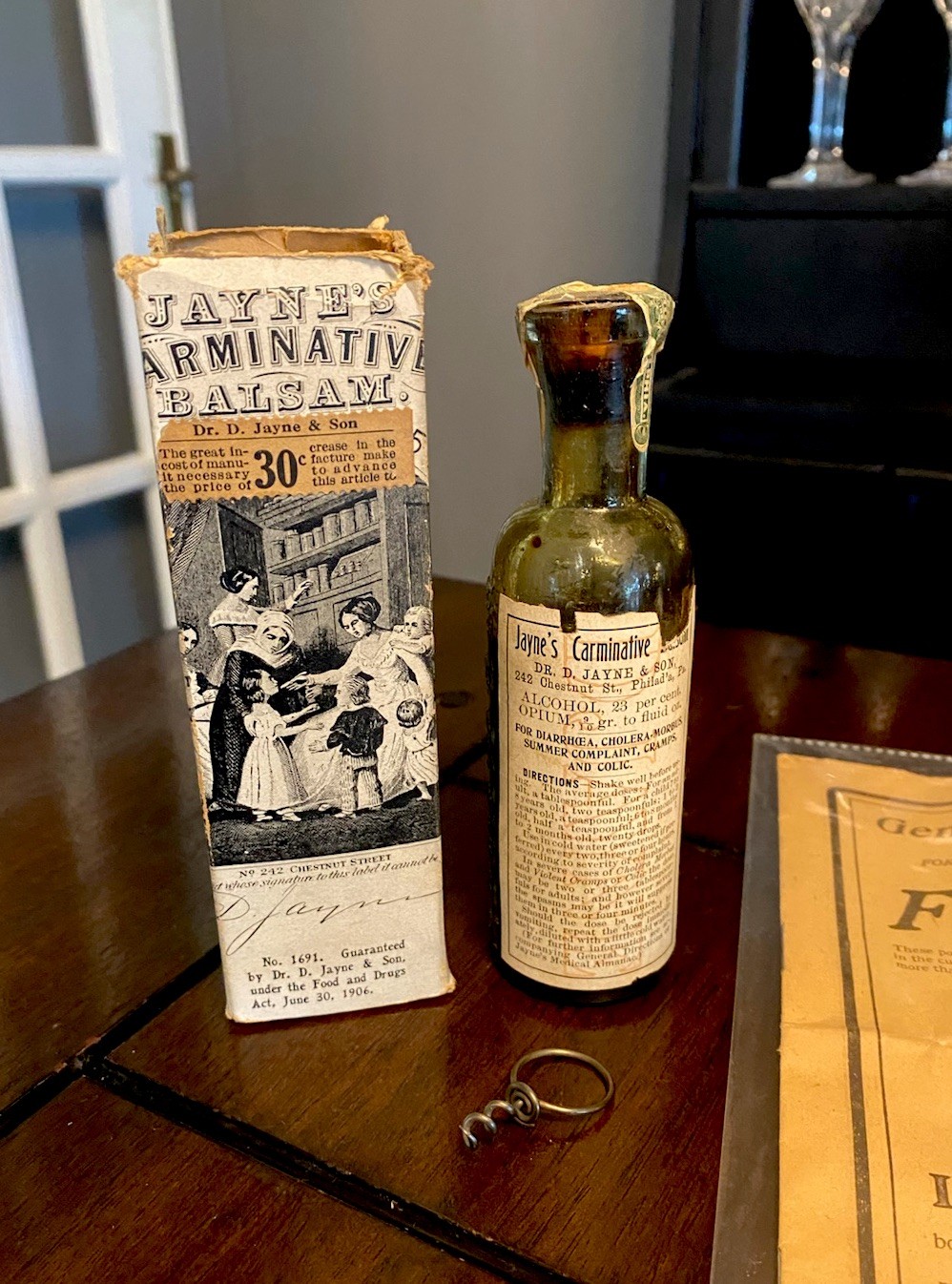
Lot Includes: Embossed & Labeled Factory Sealed Bottle (with content), Original Graphic Cardboard Box, 1905 General Directions Paper Insert, Original Wire Miniature Corkscrew
This is an extraordinarily rare, Museum Quality complete historical archive from one of America's most famous 19th and early 20th-century patent medicine empires: Dr. D. Jayne & Son of Philadelphia, Pennsylvania.While individual, empty Jayne’s bottles are occasionally dug up by collectors, it is an absolute rarity to find a completely intact retail package where the bottle, paper label, medicine contents, original graphic box, internal advertising insert, and the original wire pocket corkscrew have remained together for over 120 years
This is a premier centerpiece display for serious collectors of antique apothecary, historical glass, quack medicine, narcotics history, or early American advertising ephemera
THE ARCHIVE INCLUDES:
1. The Bottle & Label (With Original Contents)Glass: Clear paneled glass bottle in exceptional structural condition with no cracks, chips, or bruises.Label: The front paper label is remarkably well-preserved with sharp, bold black text against its aged amber patina. It boasts an incredibly transparent formulation statement typical of the transition era immediately following the Food and Drugs Act of June 30, 1906: "ALCOHOL, 23 per cent. OPIUM, 1/10 gr. to fluid oz."Contents: The bottle retains its original cork and remaining liquid content from the factory.
2. The Original Illustrated Cardboard Retail BoxA striking example of early turn-of-the-century graphic packaging. The front panel features the famous, highly detailed Victorian woodcut engraving depicting a mother administering medicine to her children.Includes the prominent 30-cent price tag graphic and the official facsimile signature of Dr. D. Jayne
Condition Note: Shows honest, age-appropriate storage wear to the top closure flaps (Missing )adding authentic character without compromising the structural integrity or display value of the front artwork
3. The 1905 "General Directions" Factory Insert .A rare piece of cross-promotional ephemera packed inside the box by the manufacturer.Copyrighted 1905, this large, double-sided document details the "New Style" packaging adopted on January 1, 1905, to combat rampant counterfeiting. It instructs buyers on how to look for the light red "D JAYNE" anti-fraud watermark on the labels.It cross-advertises the entire line of Family Medicines, including Jayne's Expectorant, Alterative, Liniment, and Specific for Tape Worm
Condition Note: Completely intact with clean text, showing original factory fold creases
4. The Original Wire Miniature CorkscrewThe tiny spiral wire cork puller ("worm") included by the pharmacy to assist the original buyer in opening the small cork seal. A frequently lost accessory that makes this lot completely unique
HISTORICAL SIGNIFICANCE:Dr. David Jayne was a pioneer of mass-market pharmaceutical advertising, famously distributing over 500 million "Medical Almanacs" globally. His Carminative Balsam was heavily marketed as a cure-all for bowel complaints, colic, cramps, and "Summer Complaint." This specific set captures the exact historical moment when patent medicines were forced to explicitly label their narcotic and alcoholic content (23% Alcohol / 1/10 Grain Opium) under federal law, making it an incredible piece of social and legal history
SHIPPING & HANDLING:Due to the fragile nature of the antique glass and the presence of historical liquid contents, this set will be packed with professional-grade bubble wrap and shipped securely.Full shipping insurance is included.International Buyers: Please review your country’s customs regulations regarding antique apothecary items prior to offerding.
DISCLAIMER FOR COMPLIANCE & SAFETY: This item is a strictly historical, antique collectible intended for museum, educational, or private display purposes only. The contents are toxic, completely unfit for consumption, and must never be ingested. By purchasing, the buyer acknowledges this is an empty/expired historical artifact.